
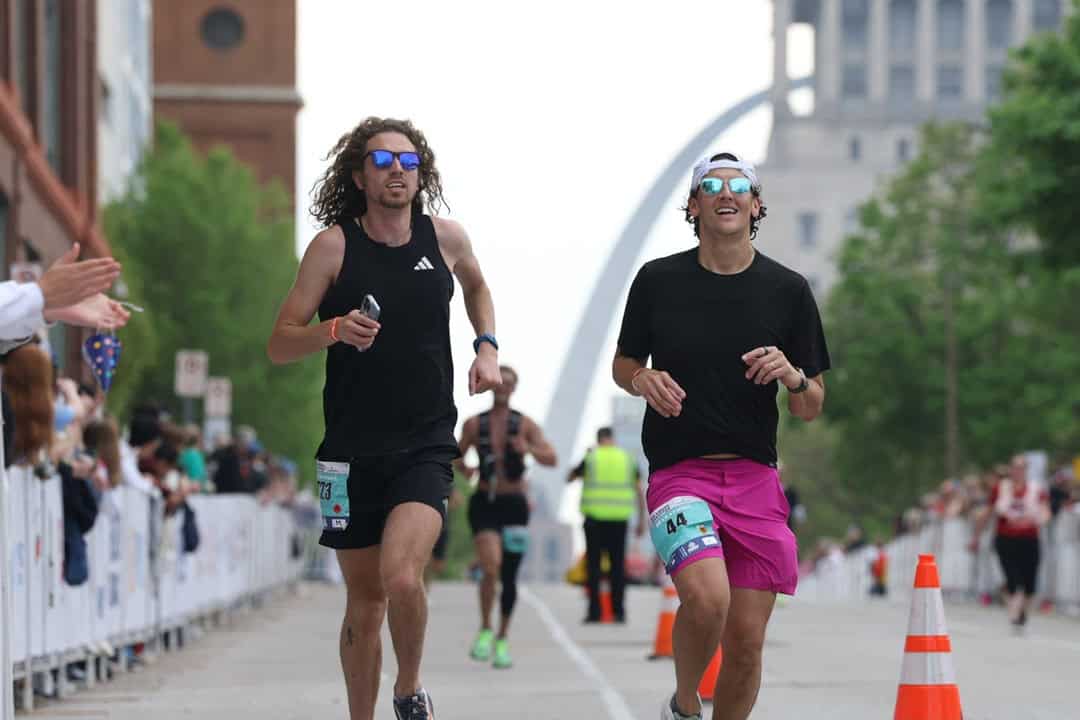
Running your first marathon is a big deal — the kind of achievement that can rewire how you see yourself. You’ll gain confidence, grit, and maybe even a few new friends along the way.
But here’s the reality: Show up on race day without a plan, and the marathon will humble you fast. The wall is real, the suffering is baked in, and finishing isn’t a given.
To spare you some hard lessons, I talked with two seasoned runners at Terrain’s parent organization, River City Outdoors, about what they wish they’d known before conquering their first 26.2. Ignore these tips at your own peril.
Start prepping early. A classic rookie mistake: undertraining. Reiss Wegman gave himself about two months to prepare for his first marathon in April. Looking back, he could’ve used a few more weeks.
“If I’d had time to do more long runs, I would’ve felt much more comfortable at the distance,” he says.
Most runners need 16 to 20 weeks of prep time; beginners may need closer to six months. More time means a stronger fitness base and fewer injury detours.
Don’t blast off the line. When the race starts, you’ll be full of adrenaline, but sticking to your planned splits is key. Otherwise, you’ll burn through your resources and have nothing left for the homestretch.
“If you don’t properly pace yourself, it can bite you in the ass in the second half,” says Matt Green, who ran his first marathon in 2018.
“Even with the adrenaline, the caffeine, the crowd hype, and feeling good, if you come out too hot, at some point you’re going to hit a wall.”
Nail down your fuel plan in advance. Wegman ran in college at shorter distances, so marathon fueling was new — and a little messy. His advice: Test everything in training.
“If I could go back in time,” says Wegman, “I would try out different fueling methods during my long runs, be it gels or chews or carb drinks, to see what works best.”
Race-day rule of thumb: Consume 30 to 60 grams of carbs per hour to stay energized. This isn’t the time to freestyle.
Keep an ace in the hole. Like many runners, Green hit the wall around mile 20 of his first marathon. His body hurt, and he was mentally checked out.
Upon further reflection, a secret weapon could have helped: a hype playlist, a favorite gel, even a hit of pickle juice.
“Have something for the last six miles that’ll amp you up,” he says. Call it your break-glass-in-case-of-suffering plan.
Expect it to feel different (in a good way). Long training runs are lonely, traffic-dodging slogs. But race day? Closed streets, cheering crowds, and zero navigation.
“You only have to worry about running,” says Wegman. “It’s a huge relief.”
In other words: If you’ve done the proper training, don’t be surprised if your first marathon feels less like a chore and more like a joyride. Similar distance — completely different vibe.