
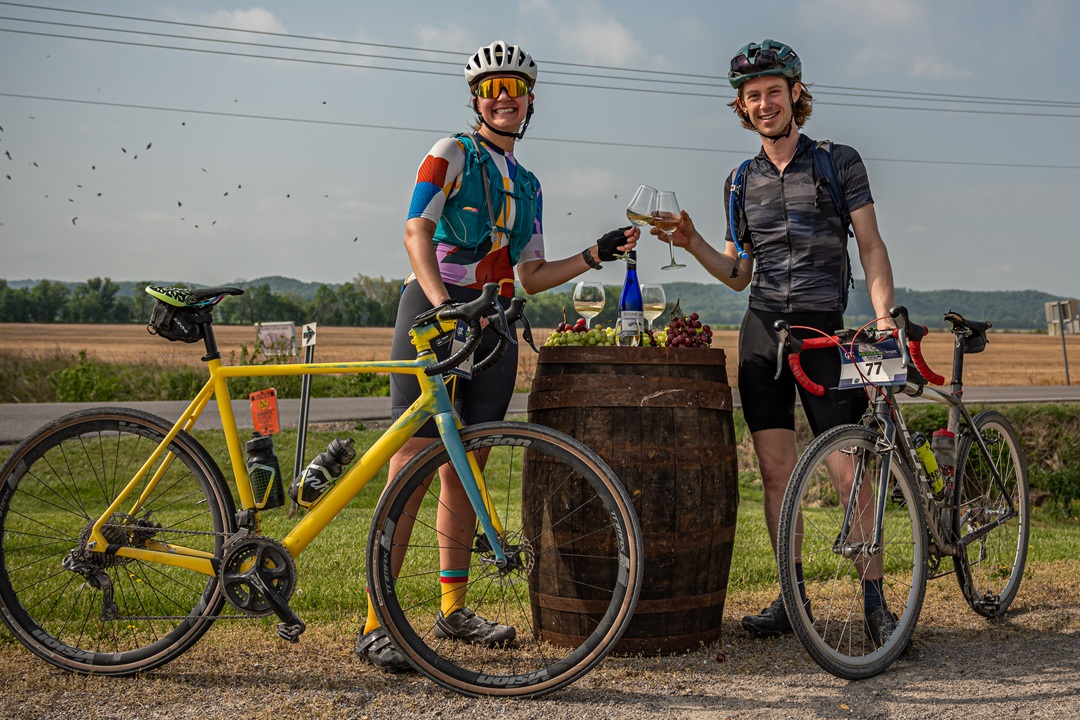
Missouri’s wineries often fly under the radar, overshadowed by the more famous wine-growing states like California or Oregon, but its wine-producing history dates back to the mid-1800s when Missouri was one of the most prolific grape growers in the country. Today, it boasts four recognized American Viticultural Areas (AVAs) and more than 130 wineries, with new players popping up each year.
Missouri’s wine scene blends rich history, diverse terroir, and warm hospitality, and the best way to explore it is via the state’s several wine trails. These curated routes — from the scenic Hermann trails to the urban wineries along the Kansas City Wine Trail — offer mapped-out vino adventures for enthusiasts and novices alike. So you don’t have to know your chardonnay from your chenin blanc to have a good time. The best part: Most can be accessed by bike, so you can pedal from one winery to the next.
Whether you want to ride through rolling foothills, tour century‑old cellars, or sip wine in a restored chapel, Missouri’s wine trails — and one just across the Illinois border — are the perfect destination for a day trip or weekend away. Here are six to experience for yourself.

Hermann Wine Trail
The Hermann Wine Trail consists of six family-owned wineries meandering along the Missouri River for about 30 miles from Hermann to New Haven. Start at either end and visit one or two wineries, or hit all six, as you explore this German-settled stretch of Missouri.
Dating back to 1855, the Adam Puchta Winery in Hermann is the oldest continuously owned family farm winery in the United States, so it’s a history lesson as much as a fine place to taste dry whites and jammy reds. From there, you’re just a short ride to three neighboring wineries right in town: G. Husmann, Hermannhof, and Dierberg Star Lane, each situated along a wine-soaked strip of First Street. G. Husmann is another historic stop. It’s named after George Husmann, aka the father of the Missouri grape industry, who planted vines in 1847 and started his winery in 1859.
While you’re in the area, log some miles on the Katy Trail, which runs alongside the Missouri River for a majority of its 240 scenic miles. And if you’re visiting in the fall, you can double-up with Hermann’s annual Oktoberfest. Running each weekend in October, it celebrates the season and the town’s German heritage with food, music, and plenty of beer.
Where to stay: Book a room in town at the Inn at Hermannhof, which has eight spacious suites and six hillside cottages, to rest up for another day of cycling and wine. If camping’s more your speed, Hermann City Park Campground has tent sites and RV sites with water and electric hookups, plus a swimming pool, basketball, tennis, and pickleball courts, and easy river access for boats and kayaks.

Kansas City Wine Trail
Starting at Amigoni Urban Winery in the heart of the city, the Kansas City Wine Trail winds east through rolling countryside for about 70 miles, with stops at nine boutique vineyards and tasting rooms. Leave your car behind and hop on your bike, and you’ll never have to pedal more than 25 miles before reaching the next destination.
Amigoni is located inside the historic Daily Drovers Telegram building in the Stockyards District. It specializes in bordeaux and rhone grape varietals — think cabernet franc, cabernet sauvignon, and viognier — and hosts tastings Tuesday through Sunday. Continuing on the trail, Arcadian Moon is the perfect pit stop for lunch. The 75-acre property boasts four lakes and a sprawling deck that overlooks the water, so there are views aplenty. And beyond its tasting room pouring a lineup of dry and sweet wines, Arcadian Moon also has a full restaurant making wood-fired pizzas, burgers, and pastas, so you can replenish some carbs before heading out.
Once you’ve had your fill of vineyards, take in a new landscape at Kaw Point Park. It marks the convergence of the Kansas and Missouri Rivers, and it’s where Lewis and Clark camped during their famous expedition in 1804. You, on the other hand, can find it using the GPS on your phone.
Where to stay: Albonée Winery sports an on-site bed and breakfast, so you don’t have to go far when you’re ready to bunk down for the night.

Northwest Missouri Wine Trail
This nine-pack of wineries offers some of the most diverse wine-drinking locations across Missouri. Want to sip reds and whites in an 1867 building that once served as a church? Head to Pirtle Winery in Weston, which has been making wine for nearly 50 years. Belvoir Winery is located in a former Odd Fellows Home that was built in 1900 and is said to be haunted. So, take that into consideration before visiting, but note that ghostly experiences are always better with a crisp glass of chardonel in hand.
As you make your way along the trail, don’t miss TerraVox Winery, which works exclusively with estate-grown grapes. And rather than growing popular old-world varietals like cabernet and pinot noir, TerraVox focuses on native North American grapes like vignoles and norton. Book a tasting to sample wine flights alongside local meats, cheeses, and chocolate.
When you’re ready for some non-alcoholic entertainment, stretch your legs at Weston Bend State Park. This scenic gem is just a few miles from Pirtle Winery and features scenic overlooks of the Missouri River, hiking and biking trails through forested bluffs, and a paved loop great for casual riders.
Where to stay: Book one of the nine spacious suites at the Inn at Belvoir Winery, and you can sleep next to the grapevines.

Lake of the Ozarks Wine Trail
Fun fact: The winding, serpent-like Lake of the Ozarks has more shoreline than the coast of California (yes, really). This, of course, makes it a popular spot for boating, fishing, swimming, and other nautical activities. But it’s also a great place to drink wine. That’s because the Lake of the Ozarks Wine Trail is home to several wineries, including Dale Hollow, Seven Springs, and Shawnee Bluff.
The family-run Dale Hollow sits on 15 acres of rolling vineyards, which make a great backdrop when you’re tasting through their portfolio of wines. Seven Springs’ good-looking grounds host live music each week, and there’s a food menu with snacks and sandwiches. And Shawnee Bluff has sweeping views of the lake, so you can’t go wrong.
Visiting these wineries puts you in close proximity to Ha Ha Tonka State Park. Take a side quest to check out the park’s hiking trails, natural springs, caves, and the ruins of a stone castle that once served as a residence.
Where to stay: When life presents a yurt, sleep in it. Lake of the Ozarks State Park has yurts that supply a comfortable place to rest your head, with log beds, appliances, and climate control. You’ll need to bring your own sleeping bags, cooking supplies, and other essentials — like a wine opener to enjoy your new purchases.

Shawnee Hills Wine Trail
Located about two hours from St. Louis, the 40-mile Shawnee Hills Wine Trail checks a lot of boxes. The area sports its own AVA and has a dozen wineries producing an array of varietals and styles, so there’s always something new to try. It’s well marked, so you can easily navigate between wineries by bike. And the trail is tucked into Shawnee National Forest, so your ability to pair wine with additional outdoor recreation — from hiking and rock climbing to hunting and fishing — is unmatched. Obviously, such activities should be performed separately from the wine.
Alto Vineyards is the oldest winery in Southern Illinois and a fun stop for friend groups and families. Sip wines in the tasting room, sprawl out on the lawn, listen to live music, and snack on sandwiches and pizza. Over at Hickory Ridge, you’ll find lush green views from the tasting room and vineyard picnic tables, where you can take in the fresh air over glasses of crisp whites and full-bodied reds. Given the dense nature of this trail — 12 wineries over just 40 miles — it’s reasonable to visit three or four wineries in one day, so plan your route accordingly and prepare for a productive outing.
Where to stay: Wine Trail Wilderness is a 37-acre private campground nestled in Shawnee National Forest, with a bocce court, a “GrainZebo” (a former grain bin turned into a social gathering place), and easy access to hiking. It’s also just a short stroll to both Hickory Ridge and Pomona wineries, in case you need to restock your supply.
Route du Vin Wine Trail
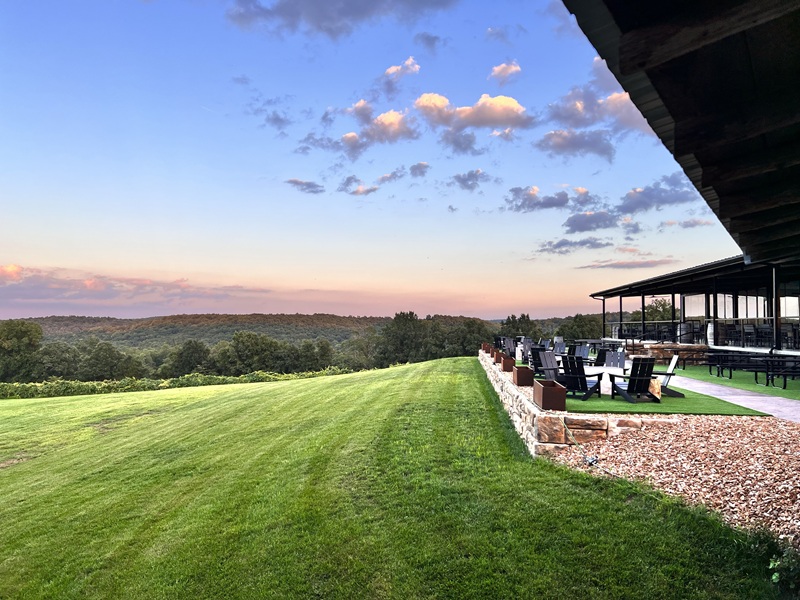
Ste. Genevieve is Missouri’s oldest European settlement, so you can expect French‑colonial architecture, charming B&Bs, and local dining that reflects the region’s heritage. You can also expect some good wine available via the county’s Route du Vin Wine Trail, a loop that covers rolling farmland and forested backroads. Bring your bike to access the surrounding nature: There are 77 miles of gravel trails and plenty more paved trails nearby, and picturesque hikes are peppered throughout the limestone hills.
Now that you’ve worked up a thirst, stop at Chaumette Vineyards & Winery. Established in 1990, it’s still a fine place to sip local varietals like norton and chardonel amongst a backdrop of rolling hills (with two hiking trails), and the on-site restaurant serves a full menu of salads, pasta, fish, and steaks. Charleville Brewery & Winery is the rare operation making both beers and wines. The best part: They’re accessible via a pour-your-own tap wall, so you can sample to your heart’s content. Stick around for lunch to fuel up with fish tacos, pretzel bites, and pizzas before carrying on.
Chateau Sainte Genevieve is the newest entrant to the local wine scene. It opened in fall 2024 and is already serving a handful of wines, with more resting in tanks and barrels. While you’re there, check out neighboring Baetje Farms. They make internationally award-winning cheeses and offer cheese tours.
Where to stay: The Villages at Chaumette is a collection of studio suites and villas that sits directly on the vineyard’s estate, offering grapevine views, kitchens, fireplaces, and patios where you can sip your wine in peace. You’ll also have access to the restaurant and swimming pool, so you’ll be comfortable and well-rested for another rigorous day of wine tasting.
Author: Kevin Gray is a contributor to Terrain.
Top image: Hermann Wine Trail. (Alpine Shop/Janzow Photography)