

For some folks, their favorite adventures only happen in distant mountains and foreign lands. Exotic destinations that they visit once or on the rarest of occasions. Perhaps they dismiss most places closer to home as familiar and boring. Or they assume they’ve already found everything worthwhile that’s within striking distance.
Other people, however, know that plenty of fun adventures can be found near home. Through experience, they’ve come to realize it’s not always about going further but about looking closer to discover the gems hiding in plain sight. Many Midwestern destinations fly well under the radar despite being surprisingly memorable and inherently unique. Here are six types of Midwestern adventures and what your favorites might say about you.
You Stop to Explore Kansas Instead of Driving Nonstop to Colorado
You probably know the type. The car is packed with friends or family, outdoor gear, and several hundred caffeinated beverages. The moment the tires hit I-70 heading west, the cruise control kicks on for 12+ hours. Let the never-ending Kansas-so-flat jokes begin. Wait, what’s that? The drivers are going to switch seats without even stopping? (Not recommended, actually illegal — for the love of highway patrol, just pull over.) For the all-or-nothing entourage, it’s Colorado or bust. And if they don’t wake up beneath a fourteener, the whole trip is a forgetter.

Tallgrass Prairie National Preserve. (National Park Service)
But when it comes to Kansas, you’ve learned better. Your curiosity has led you away from the monotonous interstate into the rolling hills and grassy plains of the Sunflower State. For your open-minded traveling style, you’ve been rewarded with some pretty surprising adventures — and plenty of oddball roadside attractions.
Perhaps you’ve hiked through wildflowers and wind-swaying fields of bluestem at the Tallgrass Prairie National Preserve between Topeka and Wichita. Or you’ve biked on the Flint Hills Trail, a state park and gravel rail trail. Plus, in the nearby town of Hutchinson, there’s a pair of quirky museums. One is Strataca, where you can go underground, 650 feet deep, to explore a former salt mine. The other is the Cosmosphere, a space museum with the largest collection of Soviet artifacts outside of Russia.
In the center of the state, not far from Salina, you may have scrambled or bouldered around the cannonball concretions at Rock City Park. Or you’ve ridden the top-ranked Switchgrass Mountain Bike Trails, a 25-mile singletrack system around the shores of Wilson Lake State Park.
Further north, one of the goofiest stops in the entire state is the World’s Largest Ball of Twine in Cawker City. It’s protected under a shelter and ringed by benches, so there’s always room to sit and stare at this stringy monument while you rest your weary legs from all the exploring.
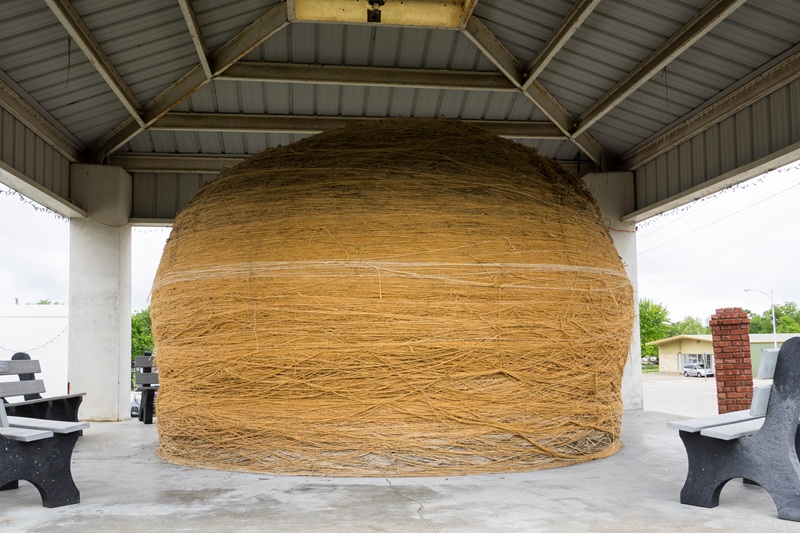
The World’s Largest Ball of Twine. (Mike Bezemek)
Years ago, my wife and I took this very trip through Kansas with friends. The shockingly good time was actually enhanced by our nonstop exchange of one-liners.
“Kind of raggedy,” said my wife as we all sat staring at a huge pile of twine.
“Smells like mildew,” said one friend.
“It’s out of round,” I piled on. “More like a twine gumdrop than a sphere.”
As it turns out, we were the world’s biggest critics of the World’s Largest Ball of Twine.
If you’re anything like us, you know that half the fun of finding wacky destinations is how silly they can be. Stopping to explore Kansas instead of driving nonstop to Colorado says you are an unbiased explorer with a creative sense of humor. You’ll give anywhere a chance, including Kansas — even if you are cracking jokes the entire time.
You Aim for Freshwater Springs in the Missouri Ozarks Instead of Florida
Of course Florida has a lot going for it: White sand beaches. Warm saltwater seas. Spring-fed rivers. Plus, tourists and traffic for days (literally). Some travelers brag about going to the Sunshine State every summer. But you are a resourceful explorer who aims for a different destination — with some surprising similarities.
From your knowledge of the Ozarks, you’ve learned that the same type of limestone karst topography that produces Florida’s springs is also abundant in Missouri. Sure, you won’t find manatees in these Midwestern spring-fed pools and streams, but you also won’t find Disney-level crowds.
You know what to expect instead: Cool waters during the peak heat of summer that run high enough for swimming and paddling. Sometimes the springs themselves are sensitive areas closed to swimmers, and swimming is allowed only where the waters flow into the main channel. One example is the upper Current River just below Welch Spring. Elsewhere, the springs flow right into established swimming holes, like Boiling Spring on Big Piney River southwest of Rolla.
When you skip Florida for the Ozarks, you ditch following the crowds for leading the local pack. And wherever you go, you know that even though the beaches are made of gravel, they’re perfect for fishing or launching a canoe. The plentiful wildlife may not include alligators and escaped Floridian monkeys, but there are numerous river otters, great blue herons, and bald eagles. You’ll take the latter.
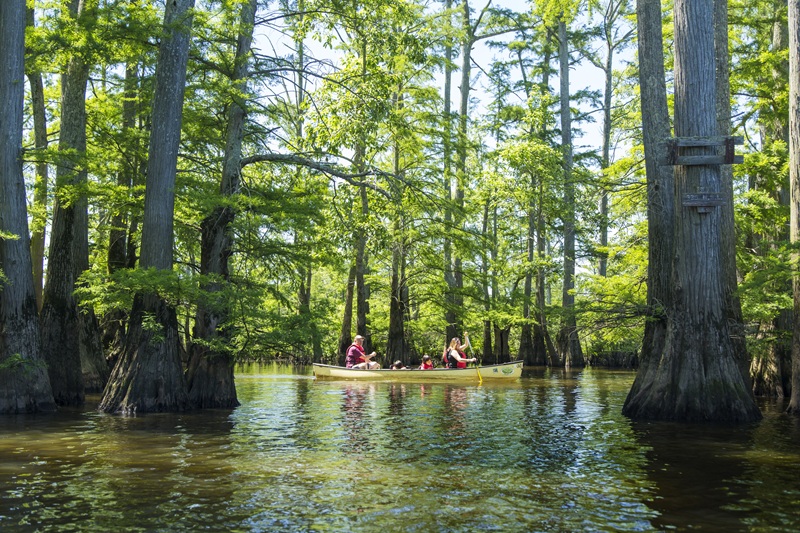
Cache River State Natural Area. (Enjoy Illinois)
You Paddle Year-Round and Not Just in Summer
When it comes to paddling in the Midwest, whether heading to the Ozarks or elsewhere across the region, the default season is understandably summer. The weather is hot and humid, making hiking and biking a challenge. That’s when lakes and rivers offer a fun way to cool down, with water splashing between family and friends — and often a stadium-sized crowd of strangers, too.
Maybe you like the summer atmosphere and join the party. Or you’ve learned to carefully plan summer floats, opting for midweek on popular rivers like the Meramec instead of the busy weekends.
Perhaps you embrace the challenge of finding quieter streams by traveling and paddling further. So, you head to the upper Current River in Ozark National Scenic Riverways or the more remote Eleven Point, where you stay overnight in a riverside campground or a paddle-in site.
Alternatively, perhaps you’re a bigger-picture kind of paddler. You grasp that sometimes it’s not about where but when. You’ve learned that, in autumn, you can watch for rain to bump the flows and then float through brilliant fall colors. In spring, you keep an eye on shifting temps and storm tracks. You know that when the trees are bare, there’s more flow in the smaller streams, like the upper Jacks Fork.
When you paddle year-round, you prove yourself to be a resilient adventurer who isn’t turned off by cold temps and rain showers. You prepare for all contingencies by packing layers, waterproof outerwear, and other essentials. Perhaps you even challenge yourself by paddling in the depths of winter, when frost sometimes rims the shoreline and glimmering icicles hang from the bluffs.
Maybe you have dreams of whitewater kayaking the class II-III+ rapids of the Saint Francis River. Winter and early spring are the prime seasons. Helmets and life jackets are required — usually a dry-top or drysuit is, too. A kayaking class, like the Missouri Whitewater Association’s spring clinic, can be your ticket to getting started.
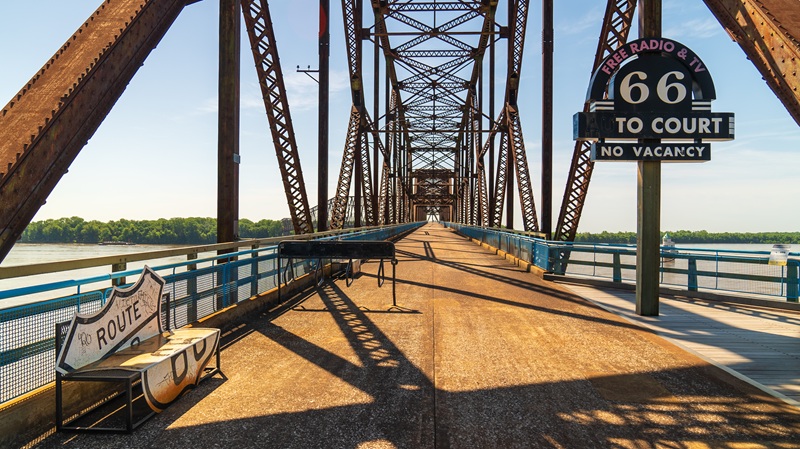
Old Chain of Rocks Bridge. (Explore St. Louis)
You Embark on Classic Road Trips That Don’t Start Several States Away
You and I know that the U.S. is home to many classic road trips: The Blue Ridge Parkway along the crest of the Appalachians. The San Juan Skyway in the Rockies of Southwest Colorado. The Pacific Coast Highway from San Diego to Seattle.
You and I also know that Midwesterners are often willing to drive long distances, when necessary, to reach such adventures. But you are an independent-minded traveler who bucks the long-distance trend. You recognize you don’t have to drive far to have fun. You know that, starting from St. Louis, there are several classic American road trips just waiting to be explored.
One option is the Great River Road, which follows the mighty Mississippi from north to south. Another classic is Historic Route 66. With the latter, some road-trippers speed through the Midwestern half on their way to the Southwest. Frankly, my wife and I were guilty of this at first, overly focused on reaching deserts and mountains. But like you, we came to learn better.
When you embark upon local road trips, you show that you’re a patient explorer who takes your time. You seek out the less-flashy stops found in between the famous destinations. Even around St. Louis, you know there are many adventurous stops along the Mother Road. For example, you may have walked, jogged, or cycled across the Old Chain of Rocks Bridge, with its famous 22-degree bend.
Just downstream in the Mississippi River, there’s a lively stretch of class III whitewater that is great for playboat kayaking. I made many lifelong friends there. Sometimes, before or after paddling, we would walk across the old bridge and take in the surreal scene, where waves froth and the St. Louis Arch rises in the distance. Speaking of which, like me, you know you can bike to Gateway Arch National Park on the 12-mile paved Riverfront Trail.
Further west, in the county, the area around Route 66 State Park has turned into a local destination for hiking and mountain biking. This is where friends and I would train before adventurous road trips. One rugged option is the rocky 14-mile Chubb Trail. Meanwhile, on the north side of the Meramec River, mellower trails can be found for making miles, like Bluff View or those at Castlewood State Park.
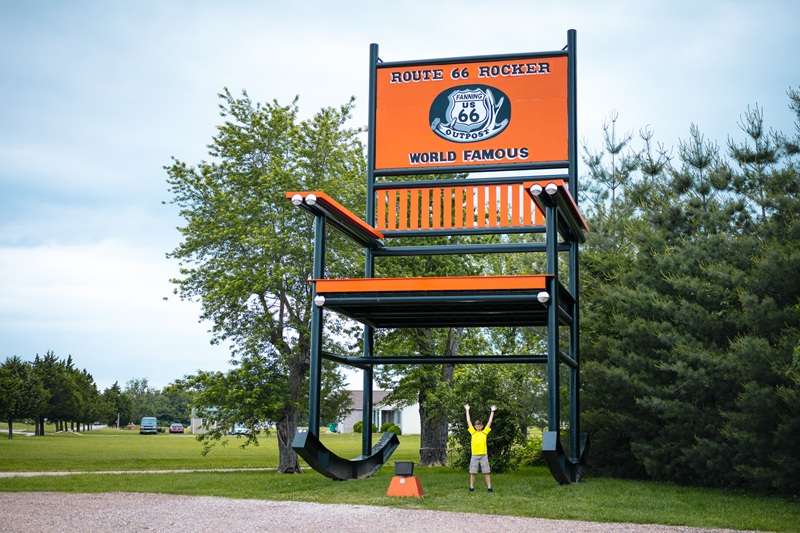
The Route 66 Rocker. (Visit Missouri)
Of course, you know that’s just the local stuff. So, you continue southwest across Missouri along original sections of Route 66 or the faster I-44, finding further adventures. Paddling on the wide Gasconade River. Mountain biking the growing scene around Springfield, with the Sac River Mountain Bike Trail or the Two Rivers Mountain Bike Park, which some buddies and I have hit on our way to and from Bentonville, Arkansas.
Maybe, like me, you sprinkle in some quirky Americana stops. The Uranus Fudge Factory (motto: “The Best Fudge Comes From Uranus!”). The alleged Jesse James hideout of Meramec Caverns. Or how about the Route 66 Rocker in the town of Cuba? It might not be the World’s Largest Rocking Chair anymore, but it’s still worth a look.
You Hunt for Waterfalls in Arkansas and Skip the Crowds in the Smokies
With over a hundred waterfalls, Great Smoky Mountains National Park and the surrounding area are a treasure. You know this. I know this. And so do the 12+ million people who visit the park every year. That’s about 120,000 visitors per waterfall (don’t check my math, but that sounds about right).
However, you are a savvy explorer, with an eye for statistics, who knows your odds are much more favorable in the Natural State. Arkansas has around 200 waterfalls spread across a much wider region. Some are easier to reach, like the roadside Falling Water Falls in Ozark National Forest near Ben Hur. Other falls require more effort.
When you hunt for waterfalls in Arkansas, you show that you’re a motivated explorer who isn’t afraid of putting in some work. Maybe you’ve been to Hemmed-In Hollow Falls on the upper Buffalo National River. Hiking overland, you’re looking at nearly six miles round-trip on a very steep trail. Luckily, you know there’s another way. Paddle there from either Ponca or Steel Creek to Kyles Landing. You also know to check the gauge first, and typically go in the winter or spring. That’s when the flow is higher, both in the river and over the falls.
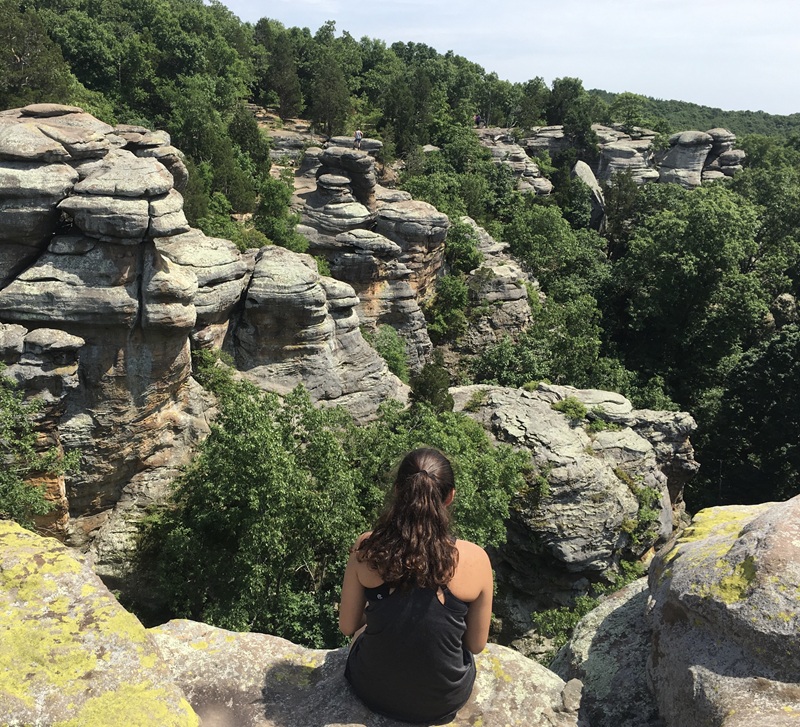
Garden of the Gods. (Southernmost Illinois)
You Explore Rugged Landscapes in Southern Illinois Instead of the Southwest
We both know that the American Southwest is a classic destination for national parks and outdoor road trips. You can hike through hoodoos, bike past natural arches, and raft the Grand Canyon — all of which are some of my favorite things to do.
But despite your efforts to reach this far-flung landscape, you must often contend with challenging conditions: High elevation deserts. Relentless sun and oppressive heat. Periodic and violent storms, whether wind, dust, rain, or snow. Every adventurer should make it to the Southwest at least once, and many will want to return.
But you and I know that by resetting our expectations, there are other rugged landscapes to explore in a different direction. You’ve discovered that, hidden between the rural farm fields of Southern Illinois, there’s a series of underappreciated outdoor destinations. Yes, the elevations may be lower, and the geology is more subtle. But the adventures are surprisingly worthwhile, and the drive is so much shorter.
Maybe you enjoy hiking and rock scrambling around Shawnee National Forest, where sandstone towers and bluffs can be found at Garden of the Gods. Or you trade the red rock slot canyons of the Southwest for a mossy emerald gulch inside the Little Grand Canyon of Illinois.
Perhaps you gravel bike on the Tunnel Hill State Trail past woods, creeks, and train trestles to the 543-foot tunnel at the summit. Down toward the southern end of the 45-mile trail, you stick around to explore the Cache River State Natural Area, with its cypress swamps and massive old-growth trees.
Yes, Southern Illinois is the rural Midwest and not the internationally popular Southwest, with its national parks and record-setting crowds. Just like Kansas is not Colorado, and Arkansas is not the Smokies, and the Ozarks are not Florida. But you and I know that sometimes these Midwestern places can feel just as fun as their more famous counterparts. Maybe you’ll be the generous traveler who shows your friends and family what you’ve figured out?
Exploring these types of places means you are proud to be an outdoor adventurer in the Midwest. I feel lucky to have met so many of you on these trails and rivers over the years. When it comes to Midwestern adventuring in places like Southern Illinois, you know there will be more sasquatch silhouettes than people. And you’re just fine with that.
Author: Mike Bezemek is a frequent contributor to Terrain.
Top image: Garden of the Gods in Shawnee National Forest. (Enjoy Illinois)
Leave A Comment