

On a hot summer afternoon in rural Illinois, a group of campers leaps into the lake, laughing, splashing, joyful.
It’s the kind of carefree moment that defines summer camp.
But for the campers here, it means much more.
Camp Indigo Point, a residential summer camp in Southern Illinois for queer and transgender youth, offers something many of its campers rarely experience: the freedom to be themselves.
Surrounded by friends who share similar experiences, campers spend their days swimming, hiking, and crafting without worrying about judgment or feeling different.
“Some of these kids would say things like, ‘I didn’t know anyone supported me,’ or ‘I’m the only trans kid at my school, and I get bullied all the time,’” says Shira Berkowitz, who advocates against anti-LGBTQ+ policies in the Missouri legislature and co-founded the camp in 2022. “We started asking ourselves: Could there be a place where kids could just be themselves without all of that?”
Today, Camp Indigo Point serves as a sanctuary — a place where LGBTQ+ youth spend their summers zip-lining through the trees, shooting arrows at the archery range, creating in the art cabin, and reading in hammocks.
A queer prom is one of the summer’s most anticipated traditions, and a lending library filled with LGBTQ+-affirming books allows campers to see their lives reflected in stories.
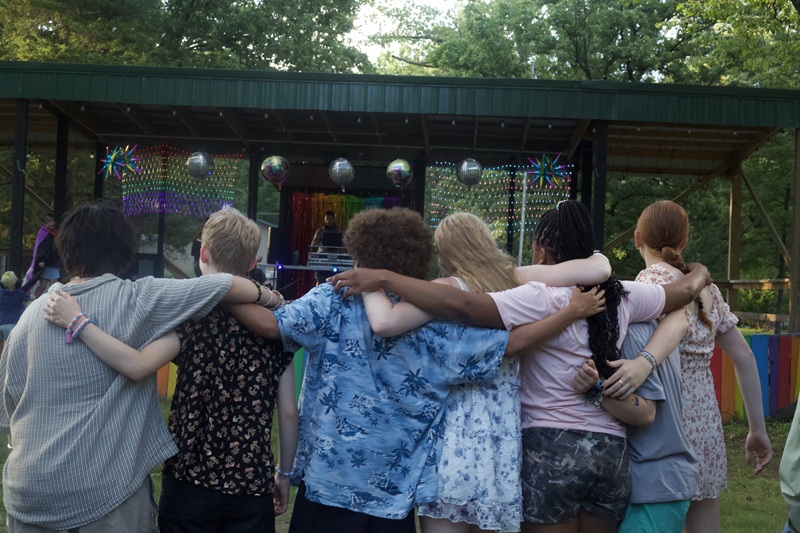
A queer prom is one of the marquee events at Camp Indigo Point. (Courtesy of Camp Indigo Point)
“Affinity spaces, where the likeness of you is in everyone else, means you can put down the burden of having to navigate the world as different,” Berkowitz says. “Inside a space like that, there’s potential to reach joy.”
The camp’s mission is rooted in a sobering reality: In a world where many LGBTQ+ youth still face isolation or hostility, the camp is saving lives, says camp co-founder Rabbi Daniel Bogard.
According to a 2024 national survey on LGBTQ+ young people by The Trevor Project, 39% of LGBTQ+ youth ages 13-24 said they seriously considered suicide in the past year.
Among transgender and nonbinary youth, that number increased to 46%. Nearly half of LGBTQ+ youth ages 13-17 reported experiencing bullying.
To address these issues, organizers built Camp Indigo Point based on two guiding principles.
First, every staff member identifies as queer, offering campers visible role models.
Second, cost should never be a barrier. The nonprofit operates on a sliding scale and provides scholarships to families in need. In 2025, about 60% of campers received financial aid.
The principles have driven success. Every year, the camp reaches full capacity and welcomes campers from across the country.
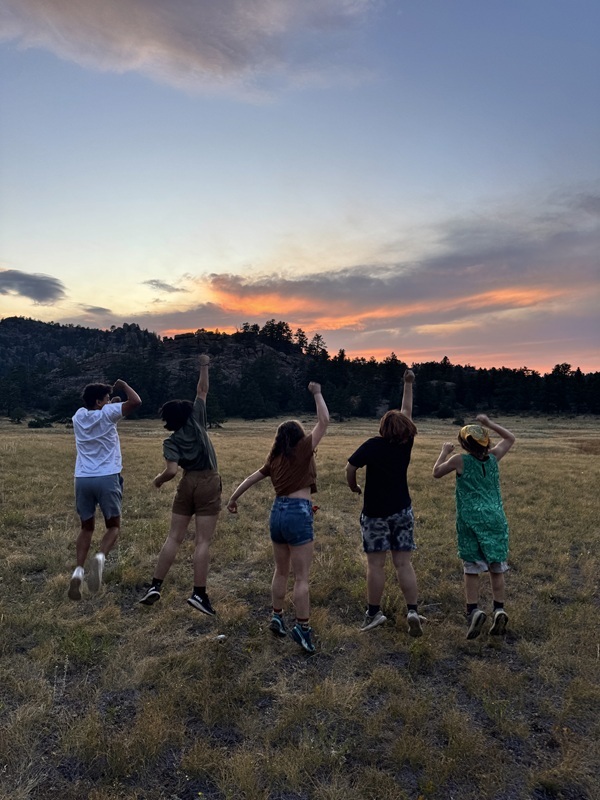
Camp Indigo Point gives queer and transgender youth the freedom to be themselves. (Courtesy of Camp Indigo Point)
Last year, the camp launched a new Colorado adventure for older campers, featuring activities like whitewater rafting, hiking, and rock climbing in the mountains.
“It’s magical,” says Oliver, 18, who attended Camp Indigo Point as a camper and returned as a counselor. “Kids feel welcomed and embraced. I feel like I can bring my full self to camp and feel included. It’s a home for these kids.”
For young campers like Noa, 12, the magic often appears in small moments, such as climbing a rock wall with a friend or drawing in the art cabin with people who understand them.
“I think it’s important so kids who are LGBTQ know there are other people like them,” Noa says. “You can hang out and feel comfortable and not feel any hate.”
Organizers say the camp’s impact extends far beyond the summer.
“We live in a world that is trying to extinguish hope from these kids’ lives,” Bogard says. “But when they have two weeks at camp, they know a different world is possible.”
To learn more about Camp Indigo Point, go here.
Author: Stephanie Zeilenga is a frequent contributor to Terrain.
Top image: Teens at Camp Indigo Point enjoy outdoor activities among friends. (Courtesy of Camp Indigo Point)
Looks like a cool camp experience. How do they create such a safe space for everyone?