
Let me start by saying I’m not a huge disc golfer. I tossed a Frisbee back in my day as a camp counselor, but I never seriously took up the hobby. It felt pretty niche.
Recently, though, a handful of friends started playing, which landed me in a few group chats with invitations to join them. And like when you’re shopping for a new car and you suddenly see the same make and model around every turn, I started to notice disc golf courses and players everywhere I looked as I visited parks around St. Louis. You’ve probably noticed them, too.
Toting bags of brightly colored discs, calling out “Fore!” and foraging in the brush when a throw goes awry, disc golfers have become a staple of many park ecosystems. Pay attention long enough, and you’ll notice the laughter, cheering, and celebrations as they make their way through the woods and open fields of the courses.
To the uninitiated, it can seem like we’re missing out. But what exactly are we missing out on? As I discovered, there’s a whole new and welcoming world once you step up to the tee pad with a driver.
Here’s a summary of what I’ve learned after playing disc golf with friends and experts over the past few weeks.
Getting Started
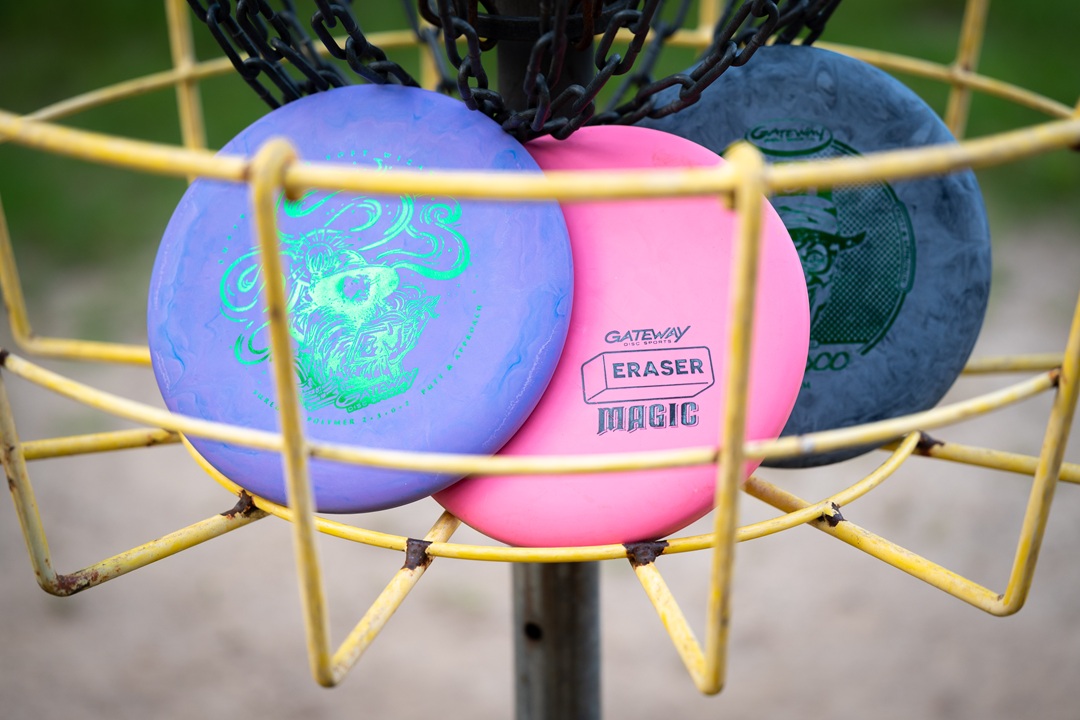
As with any new sport or hobby, there are loads of options that can sometimes seem overwhelming. The complexity starts when you try to pick out your discs. But for someone new to the sport, you really only need three or four of the projectiles. These can run anywhere from $10 to $20 each (a huge savings over traditional golf!).
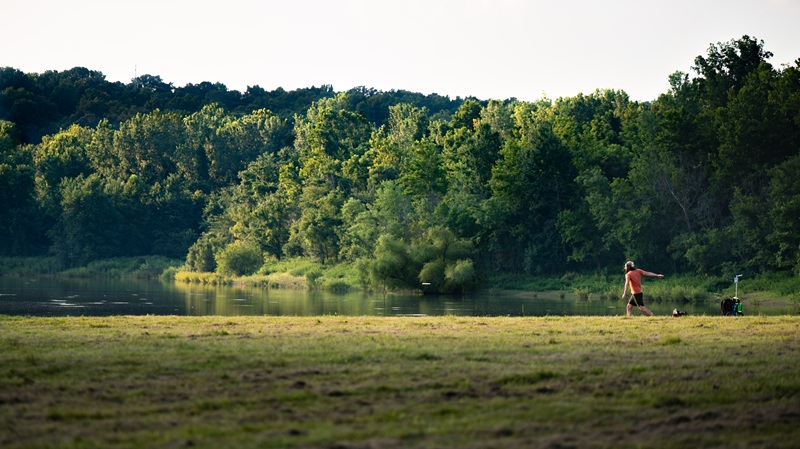
To learn more about disc selection, I sought out a friend of mine, Josiah Durham, a retired, self-proclaimed average pro. (He hasn’t played a tournament in over two years, but he’s still pretty dang good and has won prize money doing this.) I met up with him at Unger Park in St. Louis County and asked him for some real, on-the-course tips.
But before we get into that, let’s dive into some background info.
When you pick up your first disc, you might notice a series of numbers printed along with the logo or model. It’s a code that helps you understand how the disc will fly. Here’s what the numbers mean, in the order you’ll see them.
- Speed: This is a scale from 1 to 14 that indicates how fast a disc should travel and how hard you need to throw it for it to fly as intended, with 1 being the softest throw and slowest travel speed, and 14 being the hardest throw and fastest travel speed. For example, if you throw a disc with a speed of 3 too hard, it may curve wildly away from where you intended. By contrast, with a disc that has a speed of 12, throwing it hard will cause it to fly as predicted.
- Glide: On a scale from 1 to 7, the higher the number, the longer the disc will stay in the air.
- Turn: On a scale of -5 to 1, this indicates how much the disc will veer right at the beginning of your throw, presuming you’re right-handed. The lower the number, the more the disc will curve right and follow your hand as you release the disc.
- Fade: This is a scale of 0 to 5, and the higher the number, the more the disc will correct back to the left at the end of its flight (again, presuming you’re right-handed).
Confused yet? Here’s an example that may help clarify things. Let’s say a disc has the numbers “6 4 0 2” printed on it. This would translate to a moderately speedy disc (6 out of 14), with some float (4 out of 7), that flies straight (0), and fades to the left at the end (2).
If you’re still feeling a bit perplexed, don’t worry. Honestly, I was, too. With all this new information, I felt like I needed to get out and simply do it to help my brain understand everything.
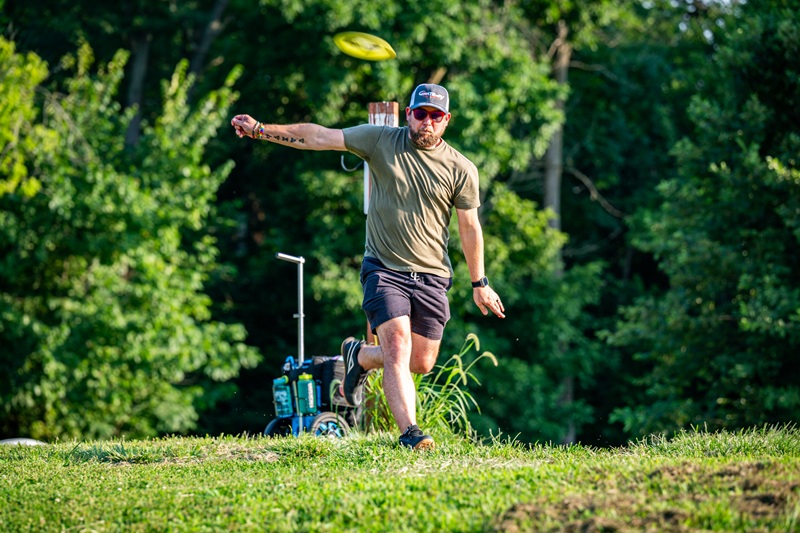
Which brings us back to my friend Josiah Durham. These were his words of wisdom as we made our way around Unger’s 18-hole course:
- Keep it simple. When starting out, you’ll want a “stable” driver, a midrange disc, and a putter. Whether a disc is stable depends on how much it curves and in which direction it turns in flight. For righties, over-stable discs curve left, and under-stable discs curve right. A stable disc flies as straight as possible.
- Don’t try to throw high-speed drivers too soon. It’s tempting to pick the disc equivalent of a Big Bertha, but you’ll end up with poor technique. Instead, stick to a stable midrange disc, which will show you flaws in your technique and form.
- Practice with the same discs for a while. You want to get to know them, spend time with them, and be able to throw them consistently. Think of them as a high-quality Tinder match in today’s volatile dating scene. Minus the throwing part.
- Carry two of the same putter. This goes hand in hand with getting to know your discs. Putters require the most finesse, so every time you putt, throw the second one so you get an extra rep to practice. Plus, if you lose one, it won’t be like going through a tough breakup. You’ll have another trusty companion.
Gearing Up
If you want to get started as cheaply as possible, run out, buy (or borrow) a few discs, and go play. It’s a good idea to have a sling to carry your discs. As your disc arsenal grows, you may want to upgrade to a bag. You’ll find options with wheels, insulated water bottle holders, and much more.
As your skills and love for the sport progress, so too will your desire for additional accessories — items like chalk and towels to improve your grip, a repair tool to smooth out dings and scratches on your discs, and a retrieval tool for those times when an errant throw ends up lodged in a tree or floating in a pond. Because there’s nothing worse than taking a second lap of the course because you lost a disc.
Also, bring bug spray. Because Missouri and tall grass necessitate it.

Etiquette
For the most part, disc golf etiquette mirrors that of standard golf. The basics: Call out “Fore!” if your throw is at risk of hitting someone. The player farthest from the basket throws first. Allow faster groups to play through so they can maintain their pace.
It’s possible you’ll lose a disc someday, but it’s just as likely you’ll find one. That’s why it’s a good idea to write your name and phone number on your discs. This way, when it’s found, the finder can reach out to you to return it. It’s also good etiquette to try to return a disc when you find one. Bonus: It’s an easy way to find a new friend to get you out on the course.
Shopping and Playing
St. Louis has a strong and growing disc golf community. We’re incredibly lucky to have over two dozen courses in the region, as well as multiple leagues and places to pick up new gear.
Where to Shop
Gateway Disc Sports
Maryland Heights is home to Gateway Disc Sports, owned by David McCormack. Founded in 1994, Gateway has produced over 50 Professional Disc Golf Association-approved discs and has designed and built over 100 championship-caliber courses, including Eagles Crossing near Hawk Point, one of the country’s top-rated courses. (McCormack was incredibly helpful with this article. If you want to learn a thing or two about the history of disc golf, he’s your man.) 10855 Metro Court, Maryland Heights, MO 63043
Mellow Disc Golf
Mellow Disc Golf opened in 2023 in Maplewood and has become a go-to for those seeking league and tournament play. Roger Martin established the store and has contributed a lot of energy to finding ways to bring the community together. 7223 Manchester Road, St. Louis, MO 63143
Where to Play
Another big advantage of disc golf over regular golf? Course fees are more reasonable, or sometimes non-exsistent. Case in point, all three of the following courses are free to play.
McNair Park
McNair Park in St. Charles offers a 1.9-mile, 18-hole course that takes about an hour and a half to play (which is on par for disc golf, no pun intended). The course features some elevation change and a variety of holes, both wooded and open. All but two holes are par three, and the par fours give you a chance to stretch out your throws and see what you can do. 3100 Droste Road, St. Charles, MO 63301
Unger Park
There’s a reason we chose this place for this article’s photo shoot. Situated in Fenton, Unger Park is a hidden gem that almost feels like it caters exclusively to the sport. It offers a nice variety of wooded tunnels and open space on the front nine, and you’ll also pass a gorgeous lake with some of the friendliest geese I’ve ever met. (They must be big disc golf fans.) As you make your way to the back nine, you’ll test your skill in the trees. 500 Yarnell Road, Fenton, MO 63026
Laderman Park
Laderman Park in Belleville is a 12-hole, all-par-three course. This one will give you a chance to practice keeping your disc straight: It features narrow fairways, and if you miss and land out of bounds, you add a throw to your total. There’s also a nearby walking trail, so pay attention to your surroundings to avoid hitting any other park patrons. 1105 Mascoutah Avenue, Belleville, IL 62220
A Final Note
Excited to learn more? UDisc is an app built specifically for disc golfers, offering access to more than 17,000 courses worldwide. You can keep score with friends, track throws and round statistics, and discover events happening near you. One of my favorite features was the interactive map, which includes course photos and reviews to help you choose your next place to play. Think of it as Strava — but tailored for disc golf.
If you’ve made it this far, welcome to the incredibly fun world of disc golf. See you on the course!